Researching Capital University’s Studio F
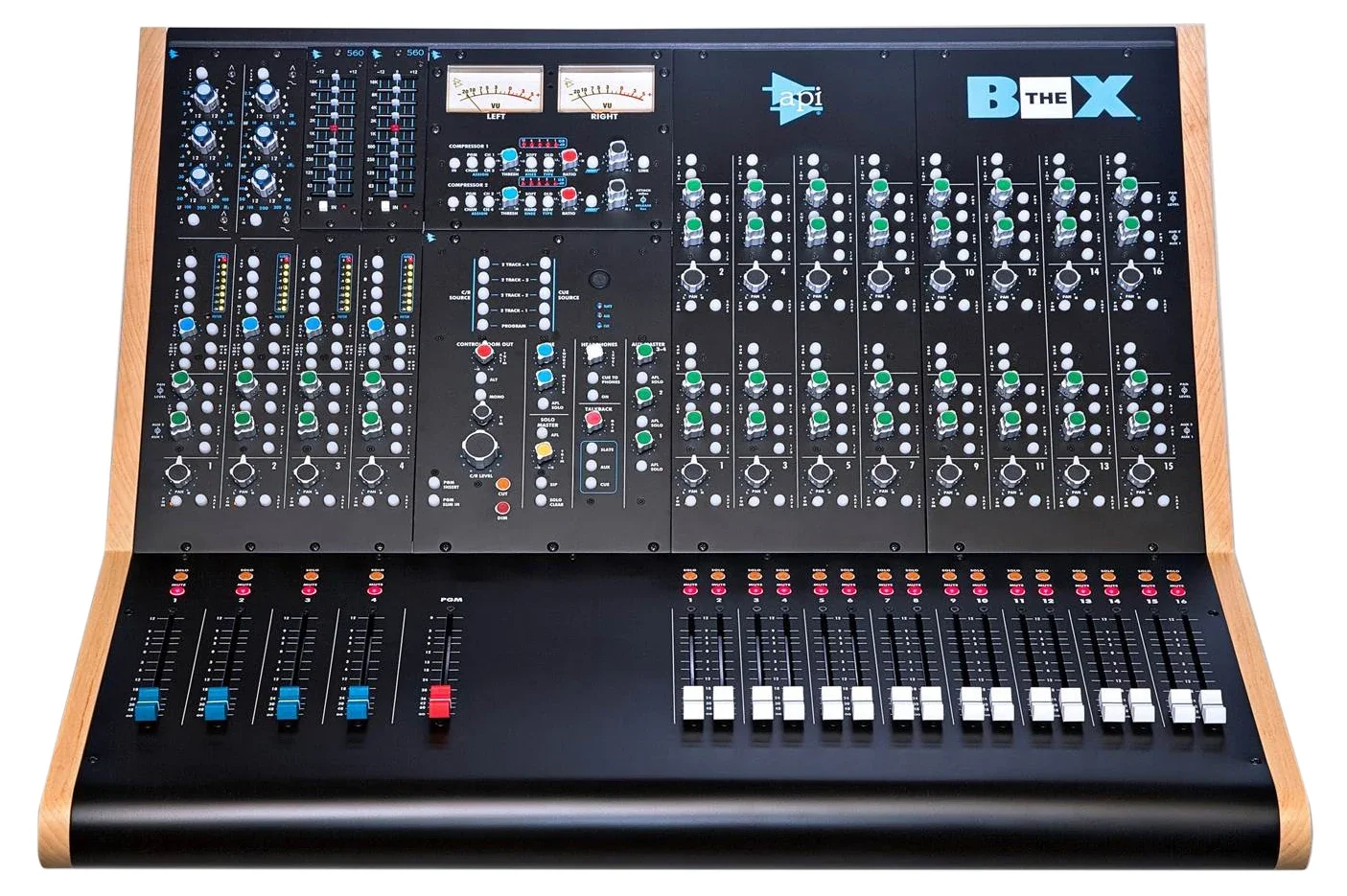
API “The Box”
API is one of the large manufacturers of music consoles that still remains entirely analogue. API has seen the decline in large analogue consoles to the transition of DAW-based studios, and with this in mind, is changing the development, purpose, and size of their consoles to work alongside more computerized mixing. The original BOX was unveiled in 2013, with the idea of creating a console that was compact and could work with the modern recording studio. With this idea, API continued to improve The Box until the creation of BOX 2, which included eight mic inputs, 16-channels, three Aux Sends, a monitoring system, and two built in API 527 compressors. The layout of the board includes an elevated control section, a split left and right, with eight input channels on the left, the Master Section in the middle, and the 16 input channels on the right. At Capital, we currently have the original API The Box, which includes 4 input channels, 16 channel summing section, a monitoring system, cue sends, dual-channel API 5227 compressors, built in 550A three-band EQs. All input/outputs, main stereo-bus inserts and outputs, and aux and cue outputs are transformer balanced along with the 548B multi-input preamps. In comparison to the newer model, the original BOX provides less inputs/outputs and the locations of the jacks are different, movement of the faders are less smooth, in addition to other changes.
Common with API manufactured technologies is the concept called the “discrete operational amplifier” (DOA). During the 70s we started to see how the silicon transistor allowed consoles the ability to cram more technology and wiring into a design than was possible previously with just valves. This new design, known as 2520, is still used today in many API products, and has been known to create the sound characteristic that API has become known for. It has been described as quick, punchy, and saturated. With that being said, this console is used for engineers who want to record a warmer analogue sound into their DAWs. An interesting feature about the console is that there is a 0dB bypass switch on the summing channels that allows you to route the signal directly to the bus at unity gain, which allows for DAW automation levels while still having the timbral and processing effects of The BOX.
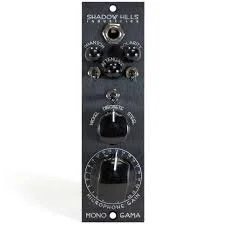
Shadow Hills Mono GAMA Pre-Amp
The Shadow Hills Mono GAMA PreAmp was introduced in 2005. It is a single channel version of their acclaimed Golden Age Microphone Amp, and adapted for the API 500 series rack system. Shadow Hills Industry is known for their all-black military-style equipment, however a limited-edition “Copper” variant of the Mono GAMA was released in 2023. This variation features hand-engraved writing and a “Stack” transformer mode. Its unique preamp sound comes from its Jensen input transformer and the three selectable output transformers, including; nickel, discrete, and steel. The Copper version has an additional fourth output transformer, called stack. In addition, the knobs are custom made, with twenty-four position swiss made attenuators for the gain control. It comes with the standard features such as phantom power, phase switch, DI, and pad.
The sonic characteristics change depending on which output transformer you choose. The discrete mode will provide a clean, uncolored sound, keeping it as natural sounding as possible; while the nickel transformer will add top-end boost while keeping the low end lowered, making the sound brighter. The steel transformer adds weight by introducing low-frequencies. The stack transformer blends the nickel and steel characteristics to create something more colorful. This preamp is best suited for all types of instruments, depending on musical style and choice of transformer. For example, if you wanted to do vocals for a rock song, you wouldn’t choose the discrete transformer, but you may choose the steel. The uncommon features include the fact that there is more than one output transformer to choose from.
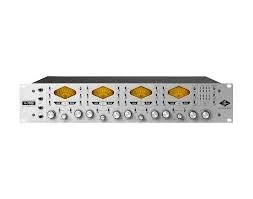
Universal Audio 4-710d Four-Channel Tone Bending Mic Preamplifier
The 4-710 consists of four UA 710 TwinFinity preamps that have been combined into one unit. It is a hybrid tube and solid state preamp with a blend knob that allows you to find your perfect mix of the two. This allows you to also control the speed of the transient response, by changing more to solid state versus tube, and if you want warmer tones, to switch more to tube. It also includes A/D converters and all four preamp channels that can output through ADAT optical, which allows you to connect to interfaces. They also added 4 line inputs that allow for the engineer to connect to analogue preamps. Additionally, each 4-710 has its own 1176-inspired compressor, although it is very limited due to the smaller space it is able to fill. Its controls only include off, slow, and fast.
The sonic characteristics depend on where you place the blend knob. The more tube used will add more warmth, harmonic richness, and the more solid-state used will sound clearer, faster, and can sound harsh when overused. This gear also provides compression, and the compressor has been known to give the “classic UA sound”, which can also change the sound. This gear has many applications, especially since it has many options on sound and transient response. More tube can be used for acoustic instruments because it can add warmth, and there is no need for fast, sharp compression, while the slower compression can seamlessly help smooth the dynamics. Some standout features include the VU meters per channel and the TwinFinity design (both solid state and tube).
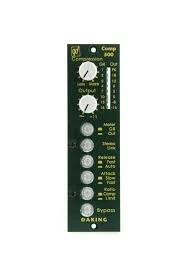
Daking Comp 500
The Daking Comp500 was introduced around December 2012 and is a VCA compressor/limiter module that is compatible with the API 500 series rack. It is intended for both tracking and mixing, is simple to use with a single knob that ranges from less-more compression. There are two selectable choices for attack, fast(~1ms) and slow(~16ms); and two for release, fast(~0.5) and auto. There are two options for ratios: either compression and limiting. It is known for its fast and accurate control without any noticeable change in color even though it has a VCA design.
Chandler Germanium Compressor
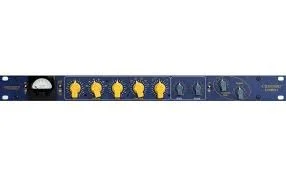
The Chandler Germanium compressor was developed by Wade Goeke as part of the “Germanium” series and released in the late 2000s. It is a Class A discrete circuitry compressor, with FET-based compression stage, germanium transistors, and four diode-based compression curves (transformer outputs),Germanium, Silicon, Zener, and Clean. It is inspired by classic vintage analogue gear, notably Neve and EMI. It offers the rich harmonic tone quality of vintage germanium with flexibility of modern technology. This is a noticeable compressor, it is known for its dense, saturated compression, with germanium stage adding 2nd and 3rd harmonics. It is used for all instruments, particularly on room mikes.
EL8-X Distressor
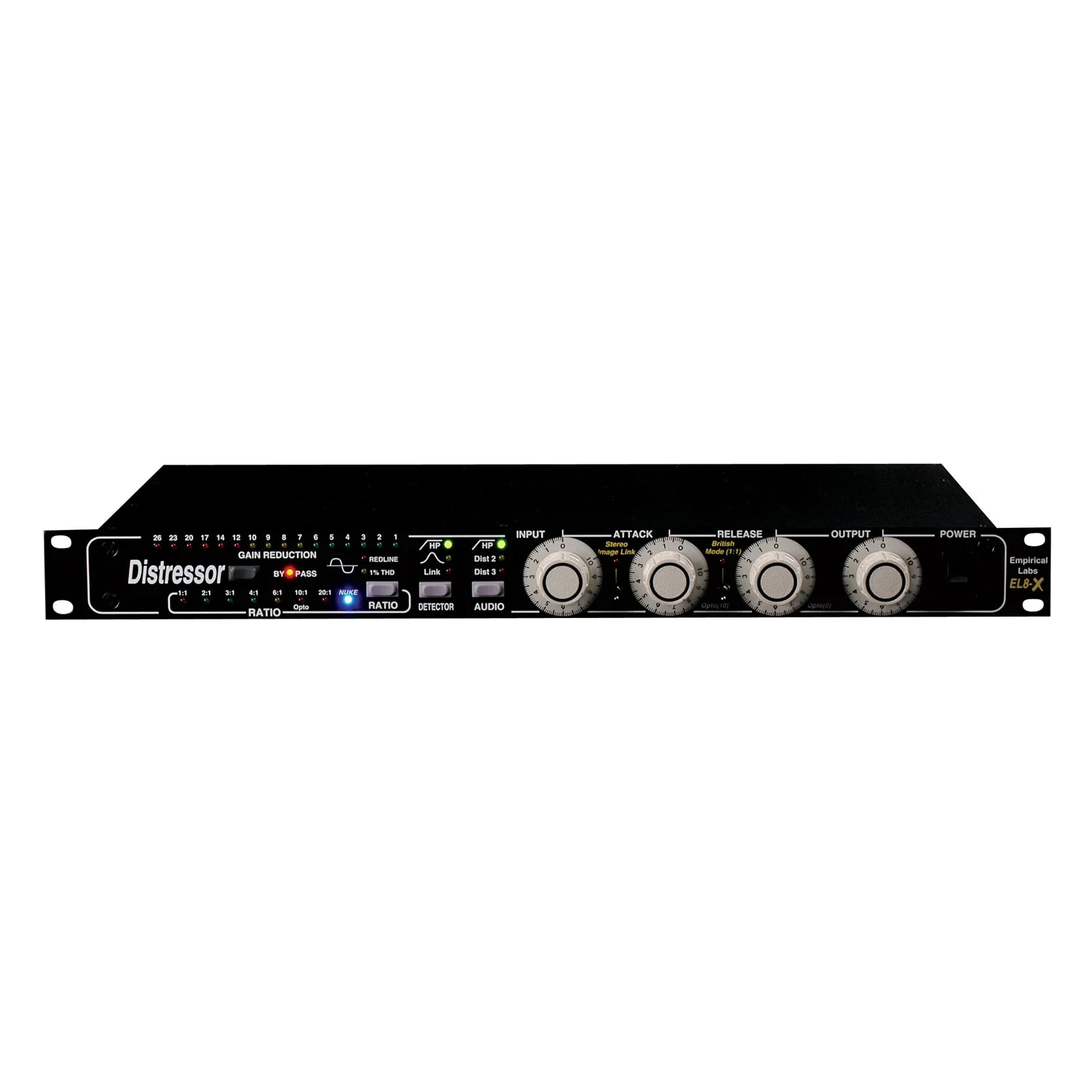
This Distressor has been “hailed” by many as the “most high-end analog compressor in modern recording history”, and has been inducted into the TECnology Hall of Fame. Originally created in 1995, the EL-8 has evolved into the EL8-X with additional features of “British mode” and a stereo image link. The design of the distressor is an analog VCA compressor with a soft knee and a fixed threshold. There are knobs to adjust the input, attack, release, and output gain. There are high pass filters, sidechain compression, options for tube and tape distortion. The Image link creates a linked pair of the distressors, allowing for identical gain reduction, and the British mode emulates the 1176 Peak Limiter. It has been used on many vocals such as Maroon 5’s “This Love” and Shawn Mendes’ “Treat You Better”, but it also has been used on bass and drums.
Cited Sources
https://www.soundonsound.com/reviews/api-box
https://www.youtube.com/watch?v=UDCr3zmFPB8&t=5s
https://tapeop.com/reviews/gear/138/the-box-2-console
https://www.youtube.com/watch?v=Z6THRbgdArU
https://modulargrid.com/a/shadow-hills-mono-gama-exclusive-copper?utm_source=chatgpt.com
https://500-series.fandom.com/wiki/Shadow_Hills_Industries_Mono_GAMA
https://gearspace.com/board/high-end/376002-shadow-hills-mono-gama-specs.html
https://plammie.wordpress.com/2013/01/13/gear-preamp-ua-4-710d/
https://gearspace.com/board/reviews/686248-universal-audio-4-710d.html
https://www.musicradar.com/reviews/tech/universal-audio-4-710d-461970
https://www.harmonycentral.com/news/uncategorized/transaudio-group-introduces-daking-comp-500-r1795/
https://tapeop.com/reviews/gear/101/comp-500-vca-compressor-500-series
